
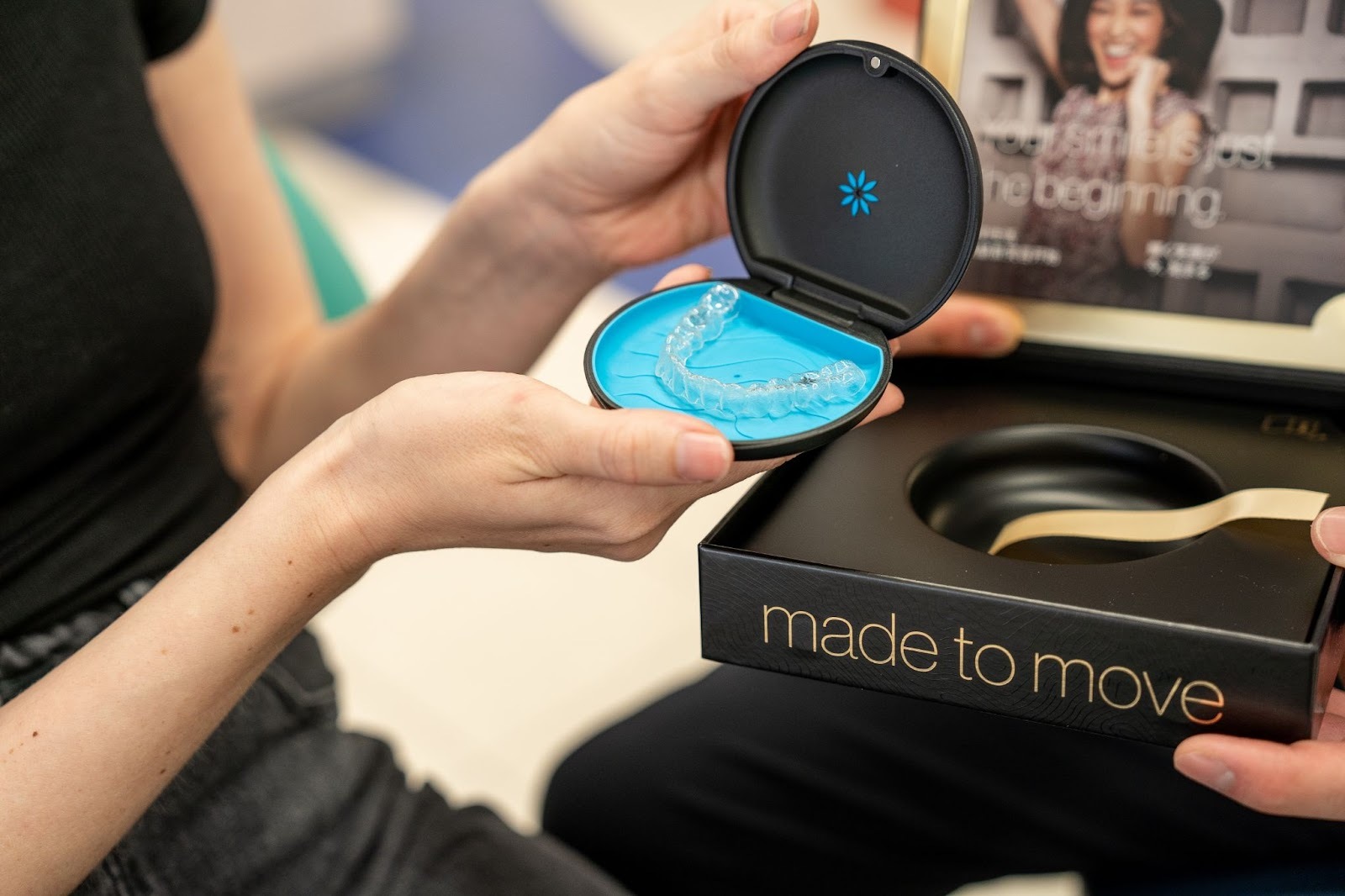
What Are Clear Aligners?
Clear aligners are a modern orthodontic treatment used to straighten teeth through a sequence of transparent, removable trays. Each tray is custom-made to fit closely over the teeth and apply gentle, controlled pressure that gradually guides them into improved alignment.
Unlike traditional braces, which rely on fixed brackets and wires, clear aligners work through incremental changes. Each aligner in the series represents a small step in a carefully planned process. When worn consistently and supervised by an orthodontist, this gradual approach allows teeth to move safely while respecting biological limits.
Although clear aligners are often associated with cosmetic improvement, they are not simply an aesthetic solution. They are medical devices designed to address functional orthodontic concerns such as crowding, spacing, and certain bite problems. Their success depends on accurate diagnosis, careful planning, and patient compliance.
Why Clear Aligners Have Become So Popular
Clear aligners have gained widespread popularity, particularly among adults who may have delayed orthodontic treatment earlier in life. Their appeal lies not only in appearance but in how they integrate into everyday routines.
Patients are often drawn to clear aligners because they:
- Are discreet and not easily seen
- Can be removed for eating and oral hygiene
- Do not involve wires or brackets
- Tend to cause less irritation to cheeks and gums
- Fit more easily around work, travel, and social commitments
However, convenience alone does not determine suitability. Understanding how clear aligners work — and where they are limited — is essential before choosing them over other orthodontic options.
How Clear Aligners Actually Move Teeth
Orthodontic tooth movement is a biological process. Teeth do not simply slide through bone; instead, the controlled pressure triggers changes in the surrounding tissues
When force is applied to a tooth:
- Bone is resorbed on the pressure side
- New bone forms on the opposite side
- The tooth then gradually shifts into a new, stable position
Clear aligners apply this force in small, controlled increments. Most systems move teeth by approximately 0.25 millimetres per stage, which is considered biologically safe. Faster movement increases the risk of pain, root damage, and unstable outcomes.
The Role of Digital Treatment Planning
Modern clear aligner treatment relies heavily on digital planning. Before treatment begins, orthodontists use intraoral scanners to create a detailed three-dimensional model of the teeth and bite.
Digital planning allows orthodontists to:
- Map tooth movement from start to finish
- Identify movements that require attachments
- Estimate treatment duration more accurately
- Detect potential limitations early
While digital simulations are highly useful, they are still predictions. Teeth do not always respond exactly as planned, which is why clinical monitoring remains essential throughout treatment.
What Are Attachments and Why Are They Sometimes Necessary?
Attachments are small, tooth-coloured shapes temporarily bonded to certain teeth during aligner treatment. They are often misunderstood or avoided for cosmetic reasons, but they play a critical role in many cases.
Attachments help aligners:
- Grip teeth more securely
- Apply force in specific directions
- Achieve complex movements such as rotation or vertical correction
- Improve predictability and accuracy
Without attachments, aligners may struggle to control certain movements, increasing the likelihood of delays or incomplete correction.
How Often Are Clear Aligners Changed?
Most treatment plans involve changing aligners every 7 to 14 days, depending on:
- The complexity of the movements
- Patient age
- Biological response
- Orthodontist preference
Each aligner continues the sequence of planned movement. Skipping aligners, wearing them inconsistently, or switching too quickly can disrupt treatment and compromise results.
How Long Does Clear Aligner Treatment Take?
Treatment time varies significantly between individuals. Some mild cases can be completed relatively quickly, while others require longer-term planning and refinement.
Typical treatment ranges:
- Mild crowding or spacing: 6–9 months
- Moderate alignment or bite concerns: 9–18 months
- More complex cases: Up to 24 months or longer
Treatment duration depends not only on case complexity but also on compliance. Clear aligners must be worn for 20–22 hours per day to maintain consistent and predicable force.
What Orthodontic Issues Can Clear Aligners Treat?
Clear aligners are effective for many common orthodontic concerns when used in appropriate cases.
They are commonly prescribed for:
- Mild to moderate crowding
- Small gaps between teeth
- Relapse after previous orthodontic treatment
- Certain bite issues, such as a mild overbite or crossbite
- Alignment problems affecting function or appearance
However, aligners are less predictable for:
- Severe crowding
- Large vertical tooth movements
- Significant jaw and bite discrepancies
- Cases requiring major bite correction
In these situations, braces and Invisalign as a combined approach may provide more reliable outcomes.
Clear Aligners vs Traditional Braces: A Clinical Comparison
From a clinical perspective, the choice between aligners and braces is not about appearance alone. It is about biomechanics, control, and long-term stability.
Clear aligners offer:
- Removability
- Easier oral hygiene
- Discreet appearance
- Greater comfort for many patients
Braces offer:
- Continuous force without reliance on compliance
- Greater control over complex tooth movements
- Predictability in severe or skeletal cases
In some cases, orthodontists may recommend a hybrid approach, using both systems at different stages of treatment.
What It Feels Like to Wear Clear Aligners
Most patients adapt to clear aligners quickly. During the first few days of wearing a new aligner, it is normal to feel pressure or tightness — a sign that the aligner is working.
Common experiences include:
- Mild pressure for 1–3 days after changing aligners
- Temporary changes in speech
- Increased awareness of teeth
- Minimal soft-tissue irritation compared to braces
Pain should not be severe. Ongoing discomfort should always be reviewed by an orthodontist.
Eating and Drinking With Clear Aligners
One advantage of clear aligners is the lack of dietary restrictions. However, aligners must be removed before eating or drinking anything other than water.
Failing to remove aligners during meals can:
- Stain the trays
- Warp the plastic when exposed to heat
- Trap sugars and acids against the enamel
Brushing and rinsing before reinserting aligners helps protect teeth and gums throughout treatment.
Oral Hygiene During Clear Aligner Treatment
Although aligners allow normal brushing and flossing, hygiene standards must remain high. Aligners create a sealed environment around the teeth, making cleanliness essential.
Best practices include:
- Brushing after every meal
- Flossing at least once daily
- Cleaning aligners with lukewarm water and mild soap
- Avoiding toothpaste, which can scratch the trays
Good hygiene reduces the risk of decay, gum inflammation, and unpleasant odours.
How Much Do Clear Aligners Cost in Australia?
Clear aligner treatment costs vary because no two orthodontic cases are the same. Pricing reflects the complexity of tooth movement, length of treatment, and level of professional supervision required.
Factors influencing cost:
- Degree of crowding or bite correction
- Treatment duration
- Use of attachments or refinements
- Frequency of review appointments
- Orthodontist experience
Typical Australian cost ranges:
- Approximate Costing: $10,032 ($97 per week no deposit)
Lower-cost treatments may appear appealing initially, but can increase the risk of incomplete correction or relapse.
Are Clear Aligners Covered by Health Funds?
Some private health funds offer partial orthodontic rebates depending on the level of cover. These rebates usually apply to both aligners and braces and are often capped at a lifetime limit.
Many orthodontic clinics also provide payment plans to help spread treatment costs over time.
Why Retainers Are Essential After Clear Aligner Treatment
Orthodontic treatment does not end when aligners are finished. Teeth naturally attempt to shift back towards their original positions, particularly during the first year after treatment.
Retainers are used to:
- Stabilise the teeth
- Allow the surrounding bone to adapt
- Maintain long-term results
Most patients are advised to wear retainers full-time initially, then transition to night-time wear indefinitely. Skipping retainers is one of the most common reasons for relapse.
Can Clear Aligner Treatment Fail?
Clear aligners can be highly effective, but they are not immune to problems. Treatment may underperform due to:
- Inconsistent wear
- Poor tracking of aligners
- Avoidance of attachments
- Inadequate monitoring
- Unrealistic expectations
When issues are identified early, refinements can usually correct the problem. Without professional oversight, issues may go unnoticed until results are compromised.
Are Clear Aligners Suitable for Teenagers and Children?
Clear aligners can be effective for teenagers, particularly once most adult teeth have erupted. Younger children often require treatments that guide jaw growth rather than tooth alignment alone.
Early orthodontic assessment allows growth-related issues to be identified even if aligners are not immediately recommended.
Frequently Asked Questions About Clear Aligners
Are clear aligners as effective as braces?
Yes, for suitable cases. However, braces remain more predictable for complex movements and severe bite issues.
Do clear aligners hurt?
Most patients experience pressure rather than pain, usually for a few days after switching aligners.
What happens if I don’t wear them enough?
Missed wear time can slow progress, reduce accuracy, and increase the likelihood or need for refinements.
Can clear aligners fix severe crowding?
Severe cases often require braces or a combined treatment approach.
How often are orthodontic check-ups needed?
Typically, every 6–8 weeks, depending on progress.
Why Professional Orthodontic Supervision Matters
Clear aligners may appear straightforward, but orthodontic tooth movement is biologically complex. Professional supervision ensures:
- Accurate diagnosis
- Safe force application
- Monitoring of biological response
- Long-term stability
At Smile Team, clear aligner treatment is planned and monitored by experienced orthodontists using detailed digital modelling and in-clinic assessment. This ensures that aligners are recommended only when appropriate and alternative treatments are considered when they offer better long-term outcomes.
Final Thoughts: Are Clear Aligners Right for You?
Clear aligners are an effective, evidence-based orthodontic option when used in the right circumstances. They offer discretion, flexibility, and comfort — but they are not a shortcut.
Understanding what clear aligners are, how they work, and where their limitations lie helps patients make informed decisions and achieve results that last.
If you are considering orthodontic treatment and want personalised guidance, the most reliable next step is to book an assessment with an experienced orthodontic team that can evaluate your bite, alignment, and long-term needs properly.