
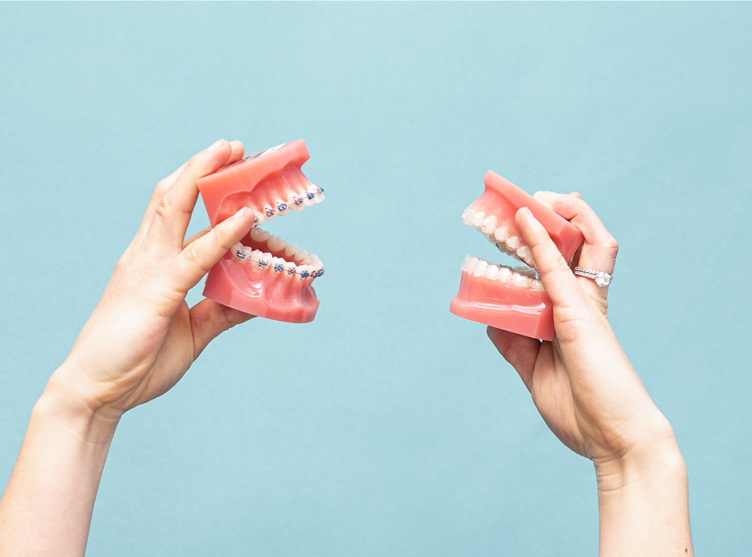
Choosing between Invisalign® and traditional braces is one of the most important decisions you’ll make when planning orthodontic treatment. Both approaches straighten teeth effectively, but they work in very different ways and are suited to different clinical needs, lifestyles, and treatment goals. Understanding these differences is key to choosing an option that delivers predictable, healthy, long-term results.
This guide explains how each system works, its advantages and limitations, and the types of orthodontic problems each option can treat. It is written with insights drawn from orthodontic practice to help you make an informed decision, whether you are considering treatment for yourself or your child.
What’s the Difference Between Invisalign® and Braces?
Both Invisalign® and braces aim to move teeth into better alignment. However, the mechanics, materials, and level of control differ significantly:
| Category | Invisalign® Clear Aligners | Traditional Metal Braces |
|---|---|---|
| Appliance Type | Removable, clear aligners | Fixed metal brackets and archwires |
| Visibility | Discreet | Highly noticeable |
| Best For | Mild to moderate crowding, spacing, and some bite issues | Mild to severe misalignment, complex bite problems |
| Compliance Required | High — 22 hours/day wear | None — fixed in place |
| Treatment Control | Good for planned movements | Excellent for complex tooth movement |
| Lifestyle Impact | Minimal food restrictions | Certain foods must be avoided |
| Comfort | Smooth plastic, generally comfortable | Possible rubbing from wires and brackets |
| Adjustments | Aligners are replaced every 2 to 3 weeks, depending on your treatment plan | Orthodontic adjustments every few weeks |
How Invisalign® Works
Invisalign® uses a sequence of custom-made, clear plastic aligners designed to move teeth. Each aligner applies targeted pressure and is worn for approximately one to two weeks before progressing to the next in the series. Treatment plans are digitally created, allowing orthodontists to map out each movement in advance.

Key Features of Invisalign®
- Custom-made trays created using digital scans.
- Attachments (small tooth-coloured shapes) may be applied to help aligners grip teeth and perform certain movements.
- Refinements may be required mid-treatment to fine-tune results.
- Daily compliance is essential for predictable progress.
Advantages of Invisalign®

1. Discreet appearance
Invisalign® aligners are clear and sit closely against the teeth, making them far less visible than fixed braces. Many adults, teenagers, and individuals who work in public-facing roles choose Invisalign® for this reason.
2. Comfortable and smooth design
Made from a flexible thermoplastic material, Invisalign® trays tend to be more comfortable than metal brackets. They don’t involve wires, so the risk of irritation to the cheeks and lips is reduced.
3. Fully removable
Aligners can be taken out for eating, brushing, and flossing. This makes oral hygiene simpler than with fixed braces and allows you to continue eating most foods as normal.
4. Fewer food restrictions
Because the aligners are removed before meals, there is no risk of hard or crunchy foods damaging orthodontic appliances.
5. Helpful for active lifestyles
Athletes and others who regularly participate in sports often find removable aligners more convenient than brackets, which may cause injury during contact activities.
Disadvantages of Invisalign®
1. Requires strict wear time
Aligners must be worn at least 22 hours per day. Any less can slow treatment or lead to relapses between stages. This makes Invisalign® less suitable for younger patients who may struggle with consistency or individuals with demanding routines.
2. Removability can become a drawback
Because aligners are removable, they can be:
- Misplaced by children or busy adults
- Left out during meals
- Forgotten after brushing
Lost aligners extend treatment time and require replacements.
3. Not ideal for every case
While Invisalign® has improved dramatically over the years, some cases still respond better to the precision and force control of traditional braces, especially:
- Severe crowding
- Deep bites or open bites
- Complicated tooth rotations
- Significant vertical tooth movement
4. Extra steps for oral hygiene after meals
You must brush your teeth before reinserting your aligners to prevent food particles from becoming trapped.
5. Attachments may still be visible
Many patients do not realise that Invisalign® can involve small composite attachments on the teeth. These are tooth-coloured but can still be noticeable up close.
How Traditional Braces Work

Traditional fixed braces consist of brackets bonded to each tooth and connected by archwires. These wires apply continuous pressure that gradually moves teeth into their planned positions. Braces have been used for decades and remain the most reliable option for complex orthodontic needs.
Types of Braces
Although this page focuses on metal braces, orthodontic options may include:
- Metal braces — durable and effective
- Ceramic braces — tooth-coloured brackets for a less visible option
- Rapid Maxillary Expander — custom-made devices designed to gently widen the upper jaw by applying pressure to the palatal bone, creating space for crowded teeth and correcting crossbites.
Advantages of Braces
1. Effective for complex cases
Braces provide precise and comprehensive tooth movement. They are often the preferred option for:
- Complex bite correction
- Severe crowding
- Teeth requiring rotation
- Deep bites, crossbites, and open bites
- Cases requiring strong vertical or torque control
2. No compliance required
Because braces are fixed in place, they work continuously. This is especially helpful for:
- Children and teenagers
- Patients who struggle with routine aligner wear
- Individuals prone to misplacing appliances
3. Durable and long-lasting
Brackets and archwires are designed to withstand the full length of treatment. They cannot be removed or lost.
4. Predictable results
Orthodontists have direct control over how each tooth moves, allowing highly accurate, precise changes, something removable aligners cannot always match.
5. Suitable for all ages
Braces work for children, teenagers, and adults. There are no limitations related to wear-time discipline.
Disadvantages of Braces

1. Visibility
Even though modern braces are smaller and more comfortable than earlier designs, they remain more noticeable than Invisalign® aligners.
2. Dietary restrictions
Hard, chewy, or sticky foods can damage brackets or bend wires. This means avoiding:
- Caramel
- Liquorice
- Hard nuts
- Chewy sweets
- Hard apples (unless sliced)
3. More demanding oral hygiene
Brushing and flossing around brackets is more challenging. Without proper cleaning, patients may experience:
- Decalcification (white marks)
- Cavities
- Gum inflammation
- Occasional discomfort
Tightening appointments and new archwires can cause temporary soreness. Brackets may also create friction against the cheeks and lips.
5. Emergency visits
Brackets can break, and wires can bend or poke the cheeks, requiring urgent adjustments.
Invisalign® vs Braces: Which Is Faster?
Treatment speed depends far more on case complexity than on the type of appliance.
In both cases of Invisalign® or braces, typical treatment can vary between 12 to 24 months, although more complex cases can take longer.
Invisalign® vs Braces: Which Is Cheaper?
Exact costs vary depending on:
- Treatment duration
- Appliance type
- Severity of misalignment
- Whether refinements are needed
In general, the difference between Invisalign® and braces is smaller than many people expect. Mild cases may cost less with Invisalign®, while complex corrections may be more cost-effective with traditional braces.
Costs cannot be accurately predicted without a professional consultation and assessment of your teeth, bite, and oral health.
Invisalign® vs Braces: Which Option Should You Choose?
Choose Invisalign® if you:
- Prefer a nearly invisible treatment
- Have mild to moderate alignment issues
- Can commit to wearing aligners 22 hours daily
- Want fewer dietary restrictions
- Need a removable appliance for sports or other special occasions
Choose Braces if you:
- Have moderate to severe crowding or spacing
- Need significant bite correction
- Prefer not to worry about compliance
- Want the most comprehensive tooth movement
- Are seeking treatment for a child or teenager
How Orthodontists Determine the Right Option

Orthodontic treatment is not only about achieving a straighter smile; it also supports long-term oral health, bite function, and overall comfort. The choice between Invisalign® and braces requires careful assessment to ensure your treatment plan is predictable and clinically appropriate.
During an orthodontic consultation, several factors are evaluated:
1. The type and severity of your misalignment
Crowding, spacing, rotations, and bite discrepancies influence whether clear aligners or fixed braces provide better control. Severe cases often benefit from the precision of braces, while mild to moderate alignment issues may be well-suited to Invisalign®.
2. Your oral hygiene habits and lifestyle
Patients who prioritise ease of brushing and flossing may prefer removable aligners. Those who play contact sports or have busy routines may also lean towards Invisalign®. Conversely, braces may be the safer choice for children or anyone who may forget to wear aligners consistently.
3. Your expectations for appearance during treatment
Adults and teenagers often appreciate the discreet aesthetics of clear aligners. Braces are more noticeable but remain a versatile and effective option for complex movements.
4. Your ability to maintain compliance
Invisalign® requires a minimum of 22 hours of wear per day. If this is unrealistic, braces provide uninterrupted tooth movement without dependence on routine discipline.
5. Age and treatment needs
Children and younger teens may respond more predictably to braces. Adults often prefer clear aligners for aesthetic reasons, provided their orthodontic needs align with what aligners can achieve.
Which Option Offers Better Long-Term Results?
Both Invisalign® and braces can deliver excellent long-term outcomes when tailored to the individual. Success depends on:
- A precise treatment plan
- Regular orthodontic monitoring
- Patient cooperation
- Consistent use of retainers after treatment
Retention Matters
Regardless of the system used, retainers are essential. Teeth naturally move over time, and a retention plan — either fixed or removable — helps maintain treatment results.
Risks and Limitations to Be Aware Of
Orthodontic treatment is safe, but each method carries its own considerations:
Invisalign®
- May require extra “refinement” aligners
- Less suitable for complex rotational or vertical movements
Aligners can be misplaced if not stored properly - Attachments may be visible up close
Braces
- Greater risk of plaque build-up without proper brushing
- Possible irritation to cheeks or lips
- Dietary restrictions apply
Occasional emergencies, such as loose brackets or protruding wires
Your orthodontist will discuss these risks and help you understand which option aligns best with your dental needs and lifestyle.
Common Questions About Invisalign® and Braces
1. Are Invisalign® aligners as effective as braces?
Invisalign® is effective for many mild and moderate cases, while braces remain the strongest option for complex bite and alignment issues.
2. Which treatment is faster?
Speed depends on case complexity rather than appliance type. Braces may be faster for severe cases; both are comparable for milder concerns.
3. Which is more comfortable?
Invisalign® is generally more comfortable due to its smooth design. Braces may cause temporary soreness after adjustments.
4. Can I eat normally with Invisalign®?
Yes. Aligners are removed before meals, allowing you to eat most foods without restriction.
5. Do braces require more appointments?
Braces require periodic tightening. Invisalign® check-ins may be spaced further apart but still occur regularly.
6. Are aligners suitable for teenagers?
They can be, provided the teen is responsible with wear-time. Braces may be more appropriate for those who struggle with routine adherence.
7. Will I need attachments with Invisalign®?
Often, yes. Attachments help aligners move teeth more effectively.
8. Is one system cheaper than the other?
Costs vary by case complexity, type of appliance, and treatment length. Neither option is universally cheaper.
9. Do I need retainers after treatment?
Yes. Retention is essential, whether you use aligners or braces.
A Balanced Summary: Invisalign® vs Braces
Both systems straighten teeth effectively, but they each offer distinct advantages. Invisalign® supports discreet, flexible treatment with strong aesthetic appeal. Braces provide the highest level of control and remain the most predictable option for complex orthodontic needs. The best choice depends on your alignment issues, lifestyle, and personal preferences.
A detailed orthodontic assessment helps determine which treatment aligns with your goals while ensuring long-term oral health and stability.
Conclusion
Choosing between Invisalign® and braces can feel overwhelming, especially when both offer strong advantages depending on the nature of your dental concerns. A professional assessment ensures that the decision is based on accurate clinical findings rather than general assumptions about either treatment.
During a consultation, an orthodontist will assess your teeth, bite, jaw alignment, oral hygiene, and medical history to determine which appliance offers the most predictable and stable outcome. This includes discussing what each system can realistically achieve, how long treatment may take, and what you can expect day to day.
If you are unsure which option fits your needs, Smile Team can support you through the decision-making process by providing clear, evidence-based guidance tailored to your situation. Whether you are exploring treatment for the first time or seeking a second opinion, their orthodontic specialists can help you understand your options in depth.
For patients wanting a clearer picture of what their orthodontic journey may look like, Smile Team also offers consultations where you can discuss concerns, compare treatment paths, and ask questions about Invisalign®, braces, or any aspect of your orthodontic care. This approach ensures your final decision is informed, well-supported, and based on professional expertise.